


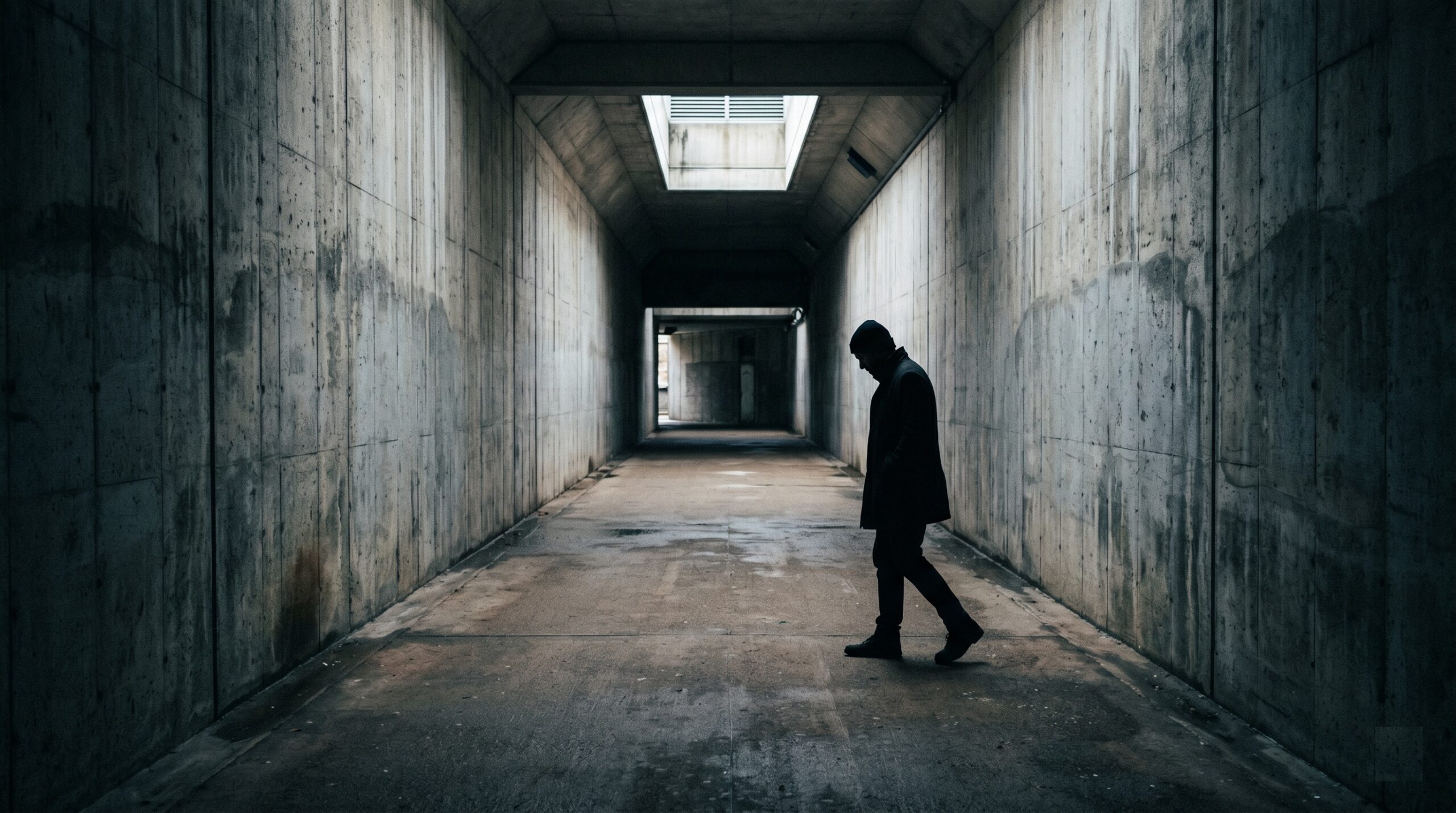
As the Kurdish diaspora bleeds into the industrial landscapes of Western Europe, the struggle for cultural survival mutates from a forced geographical severing into a psychological war against the machinery of assimilation.
Beyond Physical Banishment:
The Psychological Exile For decades, the displacement of the people of Dersim was defined by physical borders, violence, and the brutal deportations of the state. Yet, for the subsequent generations breathing within European metropolises like Berlin, Paris, and London, the essence of exile has violently transformed. It is no longer a physical barricade denying the return to the mountains; it is a psychological fortress erected by the isolating velocity of the modern city. This “urban exile” does not sever individuals by brute force; it suffocates them within the relentless, creeping void of assimilation.
The Architecture of Alienation
A culture whose roots are entrenched deep within its geography, oral memory, and communal hearths faces a catastrophic crisis when transplanted into brutalist concrete environments. The physical architecture of the European city—hyper-individualistic, accelerating, and heavily industrialized—stands in stark defiance of the communal sanctuaries required for the organic survival of minority tongues. Stripped of a central public realm where Kirmanckî can be spoken organically and functionally, the language is condemned to the shadows of the private domestic sphere, radically accelerating the threat of its absolute erasure.
The Sociological Impact on Identity
When a language is ripped from its natural habitat, the identity of its speakers shatters into fragments. Sociological data reveals that, without the anchor of dedicated institutions or cultural sanctuaries, minority languages within urban diasporas face rapid extinction within three generations. The metropolis does not wield an active ban against the language; instead, it renders it functionally obsolete within the dominant economic and social machinery. This passive assimilation is often more devastating than the historical bans of old, silently annihilating the mother tongue beneath the mask of integration and economic survival.
Digital and Cultural Resistance
Yet, within the suffocating grip of these structural abysses, a new vanguard of cultural defense awakens. The diaspora learns to carve its heritage onto the concrete walls through digital media, journalism, and modern audio-visual arts. A young generation, by transmuting the historical memory of Dersim into high-fidelity sociological archives and electronic soundscapes, proves that the language can breathe even in exile, far from the sacred geography of its ancestors. The heavy burden of protection shifts from the physical soil to the unyielding digital institution.
Conclusion
The survival of the Kirmanckî language within the diaspora is not a mere longing for nostalgia; it is a fierce assertion of universal human rights. While the democratic frameworks of the West acknowledge cultural preservation as a fundamental right, the architecture of the modern institutions required to manifest this right rests entirely in the bleeding hands of the diaspora. By documenting our sociological reality and transmuting this urban exile into an empire of intellectual creation, we forge a shield for our identity against the silent, devouring abyss of the metropolis.